Ancestral Village In Poland

Ancestral Poland.gif

We take local electric trains three hours north from Warsaw to Ostroda where we book into the Park Hotel on a lovely lake that caters to German-speaking tourists many of whom are coming to the former East Prussia to revisit lost homes and distant relatives. In fact while there we get a glimpse of a crackly BBC news report of an organization of older Germans who are demanding recompense from Russia for lost land and money during WWII…comparing themselves to the victims of the holocaust! President Shroeder, of course, refuses to intervene on their behalf, reminding them that the whole mess was due to their own country in the first place.

We luck out and find a pretty English speaking taxi driver in the line-up outside the Ostroda train station who agrees to take us the next day on a 20 minute drive (with liberal European speed limits amounting to no limits at all) to my ancestral village of Szczepankowo. And by village I mean village. Besides three or four homes with cobble stone lanes leading away from the main road, there is one tiny market. The village and the surrounding lush farmland looks like an 18th century pastoral painting.

While I walk around taking pictures of cobbles and pigs, the driver notices what appears to be the remains of a compound-like rock wall in the trees and overgrown grass across from the market. When she asks the old man in the market who lived there the response came: “Oh a rich man used to live there a long time ago.” Since my great grandparents sold their land in order to bring their 10 children to America and since anyone in 1890 who owned land would have been considered rich, and since my ancestors lived in this village as far back as the early 1700’s, I’d like to think I found their home…even if it wasn’t.

Five minutes away is Pratnica, a small town where we visited the church that my ancestors attended. Two priests, one 82 years old and a younger one originally from Gdansk, came to the door to the well-maintained quite large rectory and welcomed us in…offering candy and a viewing of copies of church records since the original were sent to Germany during the war )and since have been photographed by the LDS Library).

They let us into the church, which burned down twice in the last century…with one huge original rock cemented in near the foundation. But a rector’s chair was dated 1602 and we are told that a large hollowed out stone standing just inside the front doors is the original baptismal font. A Polish descendent like myself from Wisconsin donated nice new church pews in the 1970’s. The older priest remembers that one old Mroczynski lived nearby but has been dead several years. We drive to the home nearest his old one to visit an old woman who might remember him but there is a big lock on the door and no one is at home except the chickens and ducks.

Before leaving Pratnica, we stop for a bowl of soup at noon and our driver is happy to see Duck Blood Soup on the menu-a dish my grandparents always reserved for special occasions. We order our favorite made with rich dark smoky mushrooms from the forest.

On the way back to Ostroda our driver, in her early 30’s with two young daughters, tells us that there are few jobs in Poland and that her husband went to Ireland two years ago for work. She visited once, she says, but “things were not the same anymore so we must get a divorce.” (Skeptical Bob thinks there is more to the story.) But by this time we have made friends and she invites us to her parent’s home where she lives with her two girls on the top story. Her mother is in the hospital getting radiation and chemotherapy for breast cancer that she says is very common in Eastern Poland…due, everyone here thinks, to the Chernobl nuclear disaster in Russia about 25 years ago. We pick plums and apples from their backyard orchard. On the way out her father offers us Polish beer but we have already had coffee and cake in his daughter’s apartment and I feel bad turning him down.

My great grandmother was born in Radom…another visit to Poland some day.

Before leaving Poland we tank up one last time on pierogis..little savory pockets of noodle dough stuffed with mushrooms or other vegetables, meat or cottage cheese or sweet ones filled with blueberries or other fruit…just like my grandmother used to make at home. Oh, and I buy a CD that is popular in Poland right now…romantic songs sung by a thrilling Polish Zucchero. “I like very much,” says the young little blond in the music store. Read More

Zhangziajie

YUqE3FCf1Hd9CjfG1qqmt0-2006171132705308.gif

Bob and I said goodbye to Jana who would leave later in the day on a train to Shanghai and then home from Hong Kong. The next day we took a train to Zhangjiajie in Hunan Province.

Zhangjiajie
At the Dragon International Hotel Coffee shop…Little Santas and Christmas trees hanging everywhere…like Cinco de Mayo at home…no one knows what the day really celebrates but it is an excuse for a party…Kenny G on the stereo as usual…Old Lang Syne and Winter Wonderland. Our waitress, Liu Wen Qin, is a smiling friendly 19 year old…”excuse me, can I ask you some questions?”…absolutely we say…where are you from…where is your tour group…you are by yourselves? And we quickly become friends. She is from Hubei Province near Yichang…has two sisters one of whom she lives with in a room costing 120 yuan a month ($15) with the husband of her sister and five year old child…the child having a heart condition, she said. When she gets off work at 11am she leads us to the bus that will take us to Zhangjiajie Village in the Wulingjuan Scenic Park about 40 minutes away…by ourselves we never would have found the bus, one of many that all look alike.

Zhangjiajie Village

w020060814618397491283.jpg
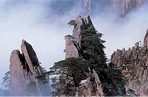
The Park is truly stunning with craggy cliffs and columns rising out of sub-tropical growth…the winter fog sitting low in the narrow canyons-a place that would be wonderful for hiking in the summer. Lonely Planet said the best hotel in the village was Minzu Shanzhuang, a thatched, Tujia-run (a Chinese minority group) hotel…but this was winter and it had snowed the night before. We buried ourselves under blankets and hot water bottles because the heater was lousy…and quit altogether during the night…

Back in Zhangjiajie City early the next morning we stumbled off the bus to the welcome-warm smile of Liu Wen Qin at the Dragon International Hotel Coffee Shop…glad for a place to park ourselves for the day until the train for Guangzhou at 6pm. We walked the streets awhile…a bookstore…Diary of Johann D. Rockefeller sitting right next to a book about Mao Tse Tung….in the window Bill Gates” Theories of Management and “How To Win Friends And Influence People.”

Since it was winter and hardly anyone was in the hotel, we spent most of the afternoon speaking English with Liu Wen Qin…Bob teasing her and loving it when, laughing delightedly, she finally catches on. He’s good at flirting with Asian girls 😉 When it was time to leave we paid the bill and by the time we had our backpacks on she had disappeared…the rumor that the Chinese hate to say goodbye apparently true…my throat getting a catch as I write this.

We settled in for what Lonely Planet said was a 24 hour train ride south back toward Hong Kong in a hard sleeper. But 6am the next morning, after only 12 hrs, we were awakened by the train attendant…we are here, she said…Guangzhou…Guangzhou!

After a night in Hong Kong we flew to the Philippines to warm up on a beach. Then we flew back to Hong Kong to catch our flight back to the States.

This is the end of our first year of travel around the world.

Ruili China

YUqE3FCf1Hd9CjfG1qqmt0-2006171132705308.gif

Coming down out of the mountains we were happy to see Ruili lying in the green lush valley below…a larger city than I thought…a Chinese/Burma border town with a mix of Han Chinese, minorities and Burmese traders hawking jade and various smoking substances. The streets were not all marked in Pinyin…the communist-designed phonetic romanization of the spelling of Chinese characters…and we spent half the afternoon looking for a hotel listed in the Lonely Planet guidebook before we finally registered at a hotel owned by the Chinese water and electric company, Li Shui, meaning Sweet Water.

That night we found a Burmese street restaurant and ordered five dishes and an alcoholic cherry drink all for a little over two dollars. Back at the hotel, we fell into bed exhausted…but were furiously wakened at various intervals during the night…by prostitutes hoping to find male foreigners!

December 26
The next day after eating breakfast noodles in the market we walked down an ancient cobblestone road to the old part of Riuli called Mengmao where a lovely old man fell into step with us along the way. He took us first to see the elaborate carving of the concrete grave monuments. Huge modular slabs of decorated concrete were being fitted together at one factory after another along the road for single and double graves. Then we walked up the hill to his own grave site where he waved us good-bye.

That night on the way from the Gem Market, five middle school students (about 17 years old) started talking to us as we walked along…hello…where are you from…what is your name…our English names are Zhong (John), Paul, Fantasy, Do Na and Steven…can we help you…listen to us…we have a good idea…all of us ending up eating delicious Burmese fried dumplings and egg cake and exchanging email addresses at a Burmese restaurant. About 10:00pm we were all on our way home when Zhong remembered it was his birthday…

listen to us…we have a good idea…catching up to us and bringing us all back to his parent’s home for cake with light delicious frosting. Then we all struck out for home again…the kids reassuring us that when their parents found out that they had been practicing their English with a couple of foreigners that the parents wouldn’t be angry about the late hour.

“Listen to us…we have a good idea!” So early the next morning the kids picked us up at the hotel and took us in the fog to their school to show us around but the headmaster was already visiting with some Japanese visitors so the guard wouldn’t let us enter. The school was out that day so the students could practice their dances in preparation for the “city party” which would celebrate the tenth year that Ruili had been designated as a “city.”

We asked the kids why the schools always had the names written on them in English…the country had joined the World Trade Organization (WTO) they said and wanted foreigners to come visit the schools.

Then again…listen to us…we have a good idea…as we went to a brand new internet room that was offering free internet on this it’s first day in operation…on the way buying us french fries with chili and a little plastic sack full of Asian Pear relish. We ate Over The Bridge Noodles for lunch…the waitress bringing to the table a tray of thin sliced meats and vegetables and noodles to be “cooked” in a very hot bowl of broth. That afternoon we all took a taxi to the Ruili City Park near the Ruili River (or the Irrawaddy River to the Burmese) where you could see Burma across the river.

While watching hundreds of students acting out various Chinese stories in the dances and music, Jana and I think we must have talked to every young person in Ruili who wanted to practice their English…do you like music…what is your favorite rock band…our favorite band is HOT (High-five Teenagers) from Korea…do you know what high-five means…then I showed them high-five which they liked..then I asked do you know the “brother” handshake like most young people give each other in America but this was met with blank faces and was going nowhere…we like American country-western music they said…we like John Denver and in our last English class we learned about The Carpenters…do you like pets…dogs or cats…do you like sports…we like sand volleyball…and tennis…and PingPong…Paul saying the Chinese weren’t as good at PingPong as they used to be…I like swimming…Jana said she liked running…Fantasy saying oh, that’s too hard…

listen to us…we have a good idea…

But we fled back to our hotel in a tuk-tuk before the afternoon was over…our throats hoarse from talking…and drank a Budweiser with a Chinese label in the warm sun in the backyard patio of the hotel.

The next morning, relieved not to be traveling by bus, we caught a plane to meet Bob in Kunming where we would proceed on to Chengdu Sichuan Province the next day by train. The only event of note on the train was my losing my sixth pair of reading glasses while bending over the squat toilet…hearing the clink and catching a glimpse of tortoise shell as they clinked down the metal pipe to the tracks below.

Christmas At Re Hai Hot Springs 2002

YUqE3FCf1Hd9CjfG1qqmt0-2006171132705308.gif

We went to Re Hai Hot Springs..a short half-hour bus ride from Tengchong.

The Asian and European continental shift also resulted in over 80 crystalline hot springs…grand Boiling Hot Cauldron…age-old Toad-Mout Hot Spring…Drunk Bird Hot Spring…Pregnant Well…Fairy Pool…Majic Pool…others…jade colored water bubbles and cloudy vapor…Beauty’s Bath…Pearl Bath…boiling hot.

At the bottom of the hill just outside the main entrance was the Jiaotong Binguan for 60 yuan a night for a double…only problem was that the WC was down the stairs and 50 meters away from our room…they had no rooms with bathroom. Showers were in a little room down the stairs and up some other stairs to the back of the main unit with a hot water pool about two feet deep and about 12×12 feet square…one each for men and women. The dreaded evil karaoke downstairs could be heard through the thin walls until late. Restaurant behind a row of triple rooms with no bathroom across the parking lot from the main building was great…they let us in the kitchen to choose ingredients….seeing what we get is part of the adventure!

Monday December 23
However, since it was nearly Christmas we decided to treat ourselves so we walked up the mountain through the park to the Bright Pearl Hotel…finding five giggling girls at the reception desk with no word of English. After a fashion we were able to secure a double room for ourselves…with all the amenities…WC (even if you did have to flush it by lifting the tank lid sideways), hot shower…and can you believe it…my laptop hooked up to the internet!

Tuesday December 24 Christmas Eve (for us on this side of the world)
We spent this day walking through the park in the sun…Jana took a dip in one of the pools…meeting five Burmese on her way back to the hotel. Where was she from and was she traveling alone…they wanted to know. Yes, she said, she was traveling with a friend…she was sorry that her friend (me) wasn’t there because she (me) and her (my) husband had just been in Burma for the month of August which they found very interesting…are you Catholic they wanted to know…surprised by the question she said, well, yes she was. I am a Catholic priest said one…the two women were nuns…and one of the two Chinese was a Deacon. They exchanged Christmas wishes and then the priest blessed Jana with safe travel.

Volcanos in Tengchong

YUqE3FCf1Hd9CjfG1qqmt0-2006171132705308.gif

A young Chinese woman on the bus had struck up a conversation in English…telling us about the sights around Tengchong. We thought that maybe we could pay her to guide us to the nearby Hot Springs but the plan was aborted after her friend drove us around in a minivan…we paid for an expensive Bai minority lunch…we looked at a hotel we didn’t want…and after the driver took us to a hotel that we didn’t ask to go to…and we still don’t know the name of. The receptionists didn’t know a word of English but we managed to get a double room. The lights dimmed every time someone used the elevator, the dreaded evil kareoke bar was on the next floor down, the telephone rang at least twice a night with no one at the other end of the line. It was ok though because it had a WC and hot shower after 9pm and there was internet down the street a few meters, through some big iron doors and up some dark stairs to a huge room full of young boys playing computer games. There was a girl on each floor with hot water and towels. Supposed to have had dance hall. restaurant, beauty shop but nothing was operating except the dreaded evil kareoke bar and the parking lot inside the hotel compound.

The first day we just hung around the neighborhood and found great homemade dumpling soup made by a very friendly Chinese woman in the market. Bought a CD of a Chinese pop singer and a bag of fresh peas in the pod and delicious tomatoes to snack on…and after some looking Jana finally found an undershirt…in military green camaflage.

We had lunch at the Myanmar Tea House…asked a couple of English speaking Burmese men when they had come to Tengchong…1988 one said…everyone exclaiming at once…one: I fled my country…we saying, oh, since the military junta took over after the last election…told one I guessed he was a University professor in Rangoon and he said laughing…oh, about 30 years ago! I suspect these men may have figured in the opposition during the last election. That night we went back for dinner taking my laptop to treat the owners and their son and a couple young Burmese/Indian patrons with bleached crewcuts to a slideshow of our month in Burma last August.

The next day we struck out for the Tengshong Guest Hotel where there was a map that was promised at the reception desk…first I and then Jana trying to gesture our need for information…seeing the wheels turning in their heads…big pain in the arse Westerners that don’t speak Chinese…until one receptionist gave Jana a card for the T.C.C. backpacker cafe!

After walking a mile with me limping behind Jana, we practically hugged 25 year old Li Bing with his long ponytail and big smile. You saved our lives in Tengchong we wailed. For two hours were reveled in our conversation in English while he cooked us a great lunch…club sandwich for Jana and fried pork with french fries for me…a nice break from the noodle soup we were eating since leaving Lijiang. In his traveler tip book a couple from the Netherlands wrote that both Lonely Planet and Let’s Go guidebooks were useless in Tengshong, “need to put TCC Cafe in those books!!!”

There are over 90 volcanic cones in Tengchong county…22 of them with preserved craters. Jana and Li climbed one large nearby cone called Dakong Shan or “Big Empty Hill” (which pretty much sums it up) while I gave a verbal little three year old girl, Zhou Xiue Ping and her mother, Yang Yong Lai, an English lesson in the warm sun…fireworks, shoes, pants vs the English trousers, ice cream. When I pointed to a picture on my Magellan Point-to-Pictures International Translator and said “tomato” she looked perplexed…finally saying “oh, tomahto!” Jana, having climbed the ubiquitous Chinese steps all the way up to the crater of Big Empty Hill said that the view of the valley peppered with craters was stunning…thinking about what it must have been like millions of years ago…all erupting…

Conversation With Roland

YUqE3FCf1Hd9CjfG1qqmt0-2006171132705308.gif

Had a final dinner at familiar and cozy Sekura’s Cafe in Old Town Lijiang…splurging on Western food…sharing our beer with Roland, a 30 year old economics teacher in a university in Singapore. (Surprisingly and to his delight Jana guessed his age…so many young Asians look much younger than they are.) Roland had attended the University at Flagstaff Arizona and a small business college in Whitewater Wisconsin.

We immediately fell into a discussion about the likely future of China…the cities will eventually be fine but what will give the Central Government trouble, everyone agrees, will be rural China. There is great unequal distribution of wealth…but as Jana says…where isn’t there? Roland said that conservedly 95% of all food, whether horticultural or animal, are genetically altered and we agreed that China will never export food to the United States because of it. A chicken develops from embryo to full grown fryer in six months, he says. Safe ecological methods, it seems, is a luxury of rich nations. Roland has done some consulting for various environmental groups and says that the Philippines has done the most of any Asian country in terms of using ecological methods like crop rotation etc. instead of the overuse of fertilizers. But the bigger problem, Roland says, is that more efficient methods of agriculture do not rise to the surface because of individual initiative as in the United States. China, because of it’s centralized government imposes one unified model, regardless of local needs and conditions, that is communicated to all the villages via satellite TV.

I mentioned the book I had been reading, “The Coming Collapse of China,” and Roland laughed…saying yes, for every opinion you will find economists agreeing or disagreeing largely because of the lack of reliable statistics. China’s problems, the book says, could be solved with political reform but the Communist Party will never let that happen. China insists it’s GNP is growing at 8% but many believe the figures are cooked in order to get that rate, Roland agreed. Yes, the GNP is growing now, but my book says the banks are going broke because the central government is spending at breakneck speed to bring China into the 20th Century world market…last year it joined the World Trade Association. Can that kind of growth be sustained at the same time that the unemployed workers in rural China, who are already demonstrating on a regular basis, cause bigger trouble for the country? And are China’s reserves really as big as they say they are?

Than we lapsed into more esoteric subjects like evolutionary biology and creationism which requires faith…and the personhood of the chimpanzee…which was the subject of Jana’s son Jordan’s Master’s thesis…a huge leap which, Roland thought, also required faith. We ended with a discussion of the probable end of the species…at the very least a stimulating end to the evening.

When we returned to Mr. Yang’s Inn at 11pm Mr. Yang, who has taken very good care of us for almost two weeks, was waiting up for us so he could close the gates…Welcome Home… he said with a smile.

The next morning as we were leaving for the bus station, Mr. Yang told us in his limited English “to take care.” We will miss this gentle man who brought Jana two eggs instead of one to eat when she was sick.

And we will miss Fifi the Lijiang dog and Debu the Beijing puppy who loved us enthusiastically and unconditionally.

Adoptions Of Chinese Children

YUqE3FCf1Hd9CjfG1qqmt0-2006171132705308.gif

In Guangshou we moved to Shamian Dao Island and stayed in the Shamian Hotel…right across the street from the White Swan Hotel where Communist dignitaries used to stay.

Of course we had to scope out the hotel and found about 20 American couples in the lobby all holding darling little Chinese girls they were adopting. China has a one-child policy and parents are fined heavily for any additional children. Consequently, since all Chinese families want boys, the little girls are often dropped off on the steps of government buildings and other public places. We have read that in the past they were often drowned and that is probably still going on in the countryside where there are few options.

One family told us it was about a two-year process which usually takes more than one trip to China and ends up costing about $20,000 per adoption.

I told Bob I wanted a little girl but he just gave me a cross look.

Siem Reap

7VJvlOW1A5Ali2rnovusuM-2006216180228245.gif

My original plan was to take a boat up the Mekong River in Cambodia to the Lao border and then on up through Laos but I kept hearing reports about the opening and closing of the border and you have to pay off the guards to let you through and someone reported they had to pay $200 and if they don’t let you through for some reason that day and then you are faced with coming all the way down the Mekong back to Phnom Penh and starting over in another direction so I said the heck with it and decided to do the “tourist route” to Siem Reap instead.

Siem Reap
While Bob took a bus to the Thai border and then on to Bangkok, I took a fast boat down the Tonle Sap (Great Lake) to Siem Reap, a sleepy village famous for it’s many wats (temples and monasteries) especially the biggest-Angkor Wat-but fast becoming a major tourist destination. Most of the people sat on the roof of the boat for the four hour trip through marshes and past entire villages on stilts.

I spent an entire day on a motorcycle taxi going from one temple to another that was built between the 9th and 14th centures in the middle of the jungle when the Khmer civilisation was at the height of its creativity.

Angkor is one of the most important archaeological sites in South-East Asia. Stretching over some 400 sq. km, including forested area, Angkor Archaeological Park contains the magnificent remains of the different capitals of the Khmer Empire, from the 9th to the 15th century. These include the famous Temple of Angkor Wat and, at Angkor Thom, the Bayon Temple with its countless sculptural decorations. UNESCO has set up a wide-ranging programme to safeguard this symbolic site and its surroundings.

You could easily spend a week or more here seeing all the monuments. Most temples are actually little more than ruins…blocks of carved volcanic and sandstone rock lying in piles at the foot of the remaining structures. Much of Angkor’s finest statuary is stored inside conservation warehouses because of the danger of theft. In some monuments such as Ta Prohm, where a French movie company was filming the few days I was there, the jungle has stealthily waged an all-out invasion with bare tree roots spilling out and over the walls.

I had a Cambodian roast chicken and vermicelli salad late lunch at Les Artisans D’Angkor, a small artisan shop and cafe amazingly situated directly opposite Angkor. I thought of my friend Jana who visited here in the 60’s and wondered how the town had changed since then. My day ended taking pictures of the sun setting pink on the face of the dark stone of Angkor Wat.

I had had my fill of war museums in Vietnam and Phnom Penh so I avoided the War Museum in Siem Reap with an exhibition of Soviet and Chinese Mi-8 helicoptors, Mig 19 destroyers, T 54 Tanks and US 105mm artillery. You could also see an artificial minefield here, the brochure says. My motorcyle driver did pull onto the grounds of a Buddhist temple on the way back from Angkor that displayed a glassed-in pagoda filled with bones and skulls that could be viewed from all four sides.

Back in my hotel I spent some time organizing photos on my computer…we have some really wonderful ones of people…especially women and children. I gave a two hour English lesson to one of the Khmer girls that worked in the kitchen of the guesthouse where I was staying.

Finally, after five days, it came time to leave Siem Reap so I regretfully said goodbye to Arnfinn and his Khmer staff and left the simple and elegant Earthwalker Guesthouse that was built and managed by a young Norwegian cooperative and made my way down a dirt road out to the highway with my pack on my back to flag down a motorcycle taxi for the 10 minute ride to the airport. The young guys working in the airport laughed at my hair when I walked in. “Motorcycle Hair” I said laughing! The $100 Lao Aviation flight that took me to Vientiane Laos had no safety card, no airline magazine, no safety demonstration by the hostess and no floatation device under the seat…and I doubt if there were oxygen masks…but we did get a sad little hamburger patty and bun with a packet of catsup.

Hanoi

KtJTxGv4eiozwJxI0Lb6qM-2006216170118412.gif

September 24 2002
Bob left Hanoi right away on the train for Sapa near the Chinese border to do some trekking among the colorful minority villages and then to spend three days in Halang Bay learning to kayak. We are traveling separately until we join a friend in Hong Kong on November 20 when the three of us will spend two months in China before going back to the US after the first of the year. Bob is presently somewhere between Hanoi and Saigon and I will meet him in Saigon on Monday for a flight to Phnom Penh Cambodia.

Flying into Hanoi felt very strange after watching years of television during the “Vietnam” War in the 6.s and 70.s. (The “Vietnam War” is called the “American War” here.) The first night in Hanoi I ate a dinner of pork with pepper sauce and french fries, a wonderful break from the Burmese and Thai food, on the deck of a popular cafe while watching the lights reflect off Hoan Kiem Lake near the Old Quarter.

I stayed at a small charming hotel called the “Classic Street Hotel” in the Old Quarter which is full of narrow winding streets with tunnel or tube houses so called because their small frontages hide very long rooms that were developed in feudal times to avoid taxes based on the width of the frontage onto the street. At the time they were only two stories high but over the years stories have been added so the buildings are now very narrow and very tall.

DSCF0012.JPG
My cozy little room had a little veranda where I could stand and watch the busy street scene below.
DSCF0006.JPG

I loved my little neighborhood for the five days I was there…early mornings the same ladies in the same clothes and cone hats came to sit on the street below me with their big shallow baskets to sell small silvery fish and vegetables…one morning a young woman at a street stall angrily chewed the heck out of one of the women for some reason and chased her away…every day in the early afternoon I ate a huge bowl of duck noodle soup for about 30 cents at a food stall down the street….sitting on a little plastic stool at a two foot high wooden table with my knees under my chin……the same old man and his wife with kind faces welcoming me like old friends each day.

DSCF0009.JPG
Across the street was the A to Z Queen Cafe which was a kick-back comfortable budget backpacker hotel with dorm beds for $2.50 a night and free internet if you bought something at the bar…otherwise you donated a few dong via honor code in the little plastic boxes sitting on top of each terminal. Every night the guest house showed a war movie to the mostly young males from around the world, many of whom are Israeli by the way. An Israeli guy told me that every young man has to spend three years in the military…and then they take off to travel to clear their heads.

Nearby was a street market where the women did all the selling and the men sat on the sidewalks drinking whisky and playing board games. As I walked by, the women laughed when I gestured and said to them…look…you work…they play…

Down the narrow street and around the corner the local street kids pestered you to buy postcards…just buy from me today…I am lucky you are my first sale today so I can buy some food…old ladies glided along in slippered feet carrying two fruit-filled baskets one on each side of them that was balanced like a pair of scales across their backs with a long flexible blade of bamboo who wanted to sell you exotic fruit…pumalos that have to be picked a few days before it is eaten so it has time to “forget the tree,” custard apples, durian so stinky it is forbidden in the hotels, green dragon fruit, guavas, jackfruit, longan, lychees, mango-steen, rambutan, starfruit and juicy persimmons.

Then you could escape all this by ducking into the Tamarind Cafe & Fruit Juice Bar where the Handspan Adventure Travel Company sold tickets to Halong Bay and Sapa in the back. Bob took a three day excursion to incredible Halong Bay and claims it is one of the very best experiences of all time. Here you were sure to find fellow foreign travelers to trade stories with…not just a few of whom…to my amazement…or maybe just never noticed before…were women traveling alone. In happy solidarity I invariably urged them on…

Taunggyi…Last Frontier of Burma

JTOL4njiflVtj5kLlwVbAM-2006175061519331.gif

Taunggyi is the official end of the line for east-bound foreigners in Burma–at least if you are travelling by road. Beyond Taunggyi lies a world of black-marketeers, ruby miners, insurgent armies and opium and methamphetamine warlords. Because it functions as a conduit for smuggled goods from Thailand, China and India, this is one of Burma’s most colorful towns. Long-haired smugglers in army fatigues down the street alongside turbaned hill tribe people and sleek-suited Chinese businesspeople. An abundance of black-market consumer goods is displayed in the Taunggyi market.

In the market we see two Buddhist nuns asking for donations from the vegetable vendors followed by a young girl in a white T-shirt with Jesus (Heart) You on the front. I particularly liked the military green combat hat with a pirated Nike label which was very popular. An Indian in a military hard hat explained to us that we could get “free” pastry at the tea shop. Guys with camoflage jackets and military green Chinese issue tennis shoes are everywhere. On a second floor alley I was carrying some chicken and rice in a sack when two small raggedy boys came up to me so I gave them my chicken. They ran off tickled to death. A few minutes later they appeared again and handed me my 1000 kyat bill that I had forgotten that I had dropped into the bag. So we took the bill and gave them back 500 kyat (about 40 cents) and you would have thought they were just handed a fortune.

On our way out an old man came up to me and spoke in excellent English. He used to be a teacher he said and just wanted to talk. San Francisco, San Francisco he laughed. (People always seem to mention San Francisco for some reason when we tell them we are from America.) Good city! Then he cautioned me against buying any of the rubies two traders were trying to offer me. “Glass,” he said, “glass!”

Mothers make a big deal out of having their babies see us. They beam if we pay any attention at all to the small ones or take their pictures-almost like it is good luck for the child. We are a symbol offreedom-freedom they long for and hope to have sometime in their lifetime.

On the way back to our Chinese owned hotel called New Paradise that night we stopped at the Coca Cola Restaurant with pigs ears and pig brains on the menu and spent 20 minutes trying to get the waiter togive us some sugar for Bob’s ice tea. Think about it. How do you explain “sugar” to someone who doesn’t understand a word of your language nor you theirs?

Continuing along the street that evening, I asked a young guy at a betelnut cart to make me some betel chews that are made with small chunks of dried areca nut wrapped in a betel leaf smeared with lime paste. Some may contain flavoured tobacco (Indian snuff) peppermint and other spices. Experienced chewers can hold betel cud in their mouths for hours without spitting. An alkaloid in the nut produces mild stimulation and a sense of well being. The chewed nut stains the teeth dark red and leaves the streets everywhere running with blood-red spit.